


Managing High Blood Pressure With Telehealth Support in Texas
Zima Medical
October 25, 2026
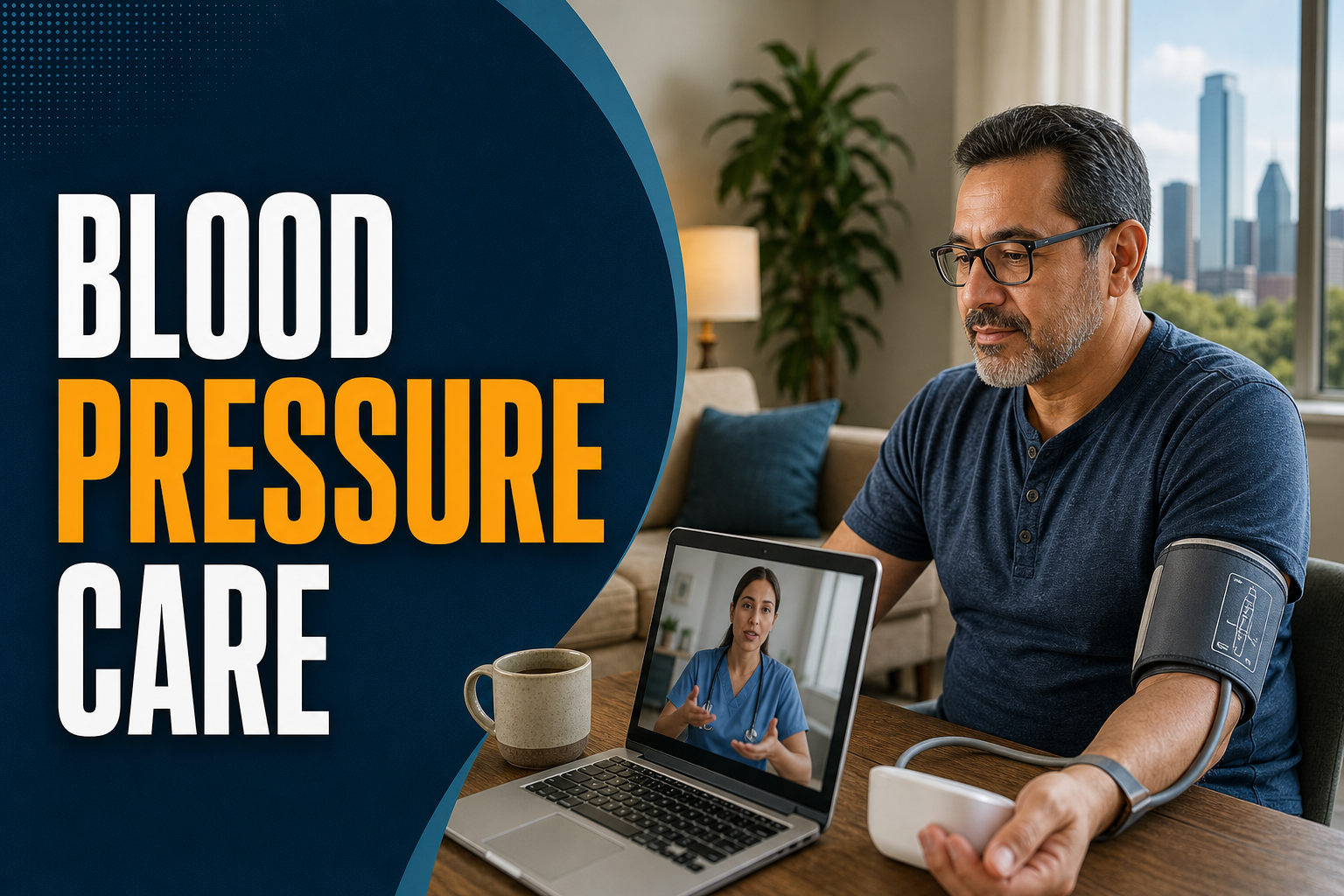
High blood pressure telehealth can help Texas patients track home readings, review symptoms, discuss lifestyle goals, and request refills when appropriate. Online visits work best when you share accurate blood pressure logs, a current medicine list, and any warning signs. A licensed clinician can guide next steps based on your health history.
Key Takeaways
- Home readings matter. A clear blood pressure log helps your clinician see patterns over time.
- Telehealth can support follow up. Online visits may help with routine check-ins, questions, and refill needs.
- Symptoms change the plan. Chest pain, severe shortness of breath, weakness, or confusion need urgent help.
- Texas patients have unique barriers. Long drives, heat, work schedules, and rural access can affect care.
- Management is ongoing. Blood pressure care often includes habits, monitoring, medicine review, and regular follow up.
How can telehealth support high blood pressure management?
Telehealth can support high blood pressure management by making follow up easier between in-person visits. You can review home readings, talk about side effects, ask refill questions, and discuss daily habits. It may also help you know when an office exam, lab work, or urgent care is needed.
High blood pressure often needs steady care. Many people feel fine, even when readings are higher than their goal. That is why regular check-ins can be helpful. A video or phone visit gives you a chance to share what has changed since your last visit.
During a visit, a clinician may ask about your readings, your current medicines, missed doses, stress, sleep, salt intake, alcohol use, activity level, and other health issues. They may also ask about symptoms such as headaches, dizziness, swelling, chest discomfort, or shortness of breath.
Telehealth is not a full replacement for all care. Some situations need an in-person exam. You may need lab tests, a heart or kidney check, or a review of your blood pressure cuff. Your clinician can help decide what is right for your case.
What makes an online blood pressure visit useful?
A helpful online visit starts before the appointment. Gather your recent readings, medicine bottles, pharmacy name, allergies, and questions. If you use a home cuff, keep it nearby. If you have a care plan from another clinician, have that available too.
- Recent readings. Share several home readings instead of one number if you have them.
- Medicine list. Include prescriptions, over-the-counter products, vitamins, and supplements.
- Symptoms. Mention any new or worsening symptoms, even if they seem mild.
- Life changes. Tell your clinician about stress, sleep changes, travel, diet shifts, or missed refills.
What should you know before checking blood pressure at home?
Home blood pressure readings are most helpful when they are taken in a calm, repeatable way. A clinician can show you how to use your cuff and interpret your log. Your readings should include the date, time, numbers, pulse, and any notes about stress or symptoms.
A home cuff can make blood pressure care online more complete. It lets your clinician see what happens outside the clinic. Some people have higher readings during office visits. Others may have higher readings at home due to stress, pain, poor sleep, or other factors.
Use a cuff that fits your arm. A cuff that is too small or too large can give a less accurate reading. If you are unsure, ask a clinician to help you choose the right size or compare your cuff with an office device when possible.
Try to keep your process the same each time. Sit with your back supported. Keep your feet on the floor. Rest your arm at heart level. Avoid talking during the reading. These steps can make your log easier to review.
What should be in a blood pressure log?
A simple log is often better than a complicated one. You can use paper, a phone note, or an app if you prefer. The key is to make the log easy to read and easy to share during a visit.
- Date and time. This helps show patterns during the day.
- Blood pressure numbers. Write both numbers as shown on the cuff.
- Pulse. Many cuffs show pulse along with the reading.
- Notes. Add symptoms, missed medicine, caffeine, stress, pain, or poor sleep.
Remote blood pressure monitoring may be an option for some patients. This may mean using a connected device or sharing readings through a patient portal or other approved method. If you are interested, ask a licensed clinician what tools fit your needs.
A clear blood pressure log can turn a short telehealth visit into a focused care plan.
When is a telehealth visit enough, and when is in-person care better?
A telehealth visit may work well for routine follow up, stable symptoms, refill questions, and review of home readings. In-person care may be better when you need an exam, lab work, new testing, or urgent symptom review. Your clinician can help choose the safest setting.
Not every blood pressure concern can be handled online. A clinician may need to listen to your heart and lungs, check swelling, review your kidneys, or order tests. If you have a very high reading plus concerning symptoms, do not wait for a routine telehealth visit.
The best setting depends on your readings, symptoms, age, pregnancy status, other health problems, and current medicines. It also depends on whether this is a new issue or long-term hypertension follow up Texas patients are continuing from a prior plan.
| Situation | Telehealth may help | In-person or urgent care may be needed |
|---|---|---|
| Routine follow up | Review logs, habits, side effects, and refill needs | If an exam or lab work is due |
| New symptoms | Discuss mild, stable symptoms with a clinician | If symptoms are severe, sudden, or worsening |
| Medication questions | Review your list and ask about next steps | If you have a serious reaction or emergency signs |
| Home cuff concerns | Discuss technique and cuff fit | If the device needs comparison with office equipment |
What if your readings change?
Blood pressure can change for many reasons. Pain, stress, illness, poor sleep, caffeine, alcohol, and missed refills can all affect readings. A single reading may not tell the full story. A pattern over time is often more useful for high blood pressure management.
If your readings are higher or lower than usual, write down what was happening around that time. Note symptoms and any missed or delayed medicines. Bring this information to your visit. Do not start, stop, or change medicine without talking with a licensed clinician.
How can telehealth help with medication refills?
Telehealth may help with refill requests when your clinician has enough information to review safety and ongoing need. You may be asked about recent readings, symptoms, side effects, other medicines, and pharmacy details. Some cases still need lab work or an in-person visit first.
Refill visits are a good time to review how your current plan is working. Tell the clinician if you have missed doses, had side effects, changed pharmacies, or had trouble paying for medicine. Also share any new medicines from another clinician.
Some blood pressure medicines may require periodic checks. These checks may include lab work or review of kidney function, minerals in the blood, or other health markers. Your clinician can explain what is needed for your situation.
How can you prepare for a refill visit?
Preparation can help reduce delays. Have your medicine bottles with you, not just a memory of the name. Many medicines have similar names. Also note the pharmacy you use and whether your insurance or location has changed.
- Refill early. Ask before the last few days, when possible.
- Share side effects. Tell your clinician about cough, swelling, dizziness, fatigue, or other concerns.
- List all medicines. Include pain relievers, cold products, supplements, and herbal products.
- Mention other care. Share recent urgent care, hospital, or specialist visits.
If you ran out of medicine or stopped taking it, be honest. Your clinician needs accurate information to guide safe care. You will not help yourself by hiding missed doses, side effects, or cost problems.
What lifestyle topics can be discussed during blood pressure care online?
Blood pressure care online can include food choices, movement, sleep, stress, alcohol, tobacco, and home routines. These talks should be practical and personal. Your clinician can help you set realistic goals and decide when more support, testing, or in-person care is needed.
Lifestyle changes can be hard to maintain. A telehealth visit gives you a chance to focus on one or two steps, not everything at once. You can talk about what fits your work schedule, budget, family meals, and access to safe places for activity.
Food and salt
Many people with high blood pressure are asked to look at salt intake. Packaged foods, fast food, canned foods, and restaurant meals can contain more salt than expected. A clinician or diet professional can help you find choices that fit your culture and routine.
Do not feel that healthy eating must be perfect. Small changes may be easier to keep. You can ask about label reading, meal planning, and ways to add more fruits, vegetables, beans, and whole grains if these foods are right for you.
Movement and weight
Regular movement can support heart health, but the right plan depends on your health status. If you have chest pain, severe shortness of breath, fainting, or new limits, ask a clinician before changing activity. Start by discussing what you can safely do.
Weight can affect blood pressure for some people, but weight is not the only factor. Sleep, stress, genetics, kidney health, hormones, and medicines may also play a role. A respectful care plan should look at the whole person.
Sleep and stress
Poor sleep and high stress can make blood pressure harder to manage. Tell your clinician if you snore loudly, wake up gasping, feel very sleepy during the day, or have panic-like symptoms. These details may point to issues that need more evaluation.
Stress support can include counseling, breathing tools, activity, better sleep routines, or help with work and family demands. If you feel unsafe or may harm yourself, seek urgent help right away.
What should Texas patients consider for hypertension follow up?
Texas patients may face long drives, rural access gaps, heat, storms, work limits, and family duties that make regular visits harder. Telehealth can reduce some travel barriers. It can also help patients keep follow up when they live far from a clinic.
Texas is large, and care access can look different in each community. Some patients live near many clinics. Others may need to drive a long distance for an appointment. Telehealth can be useful when your concern is appropriate for online care.
Heat is another local concern. Hot weather can affect hydration, outdoor activity, and how you feel. If you work outside or exercise in the heat, mention this during your visit. Your clinician can help you think through safer routines.
Storms, flooding, and power outages can also affect medicine storage, appointment access, and pharmacy trips. Keep an updated medicine list in a safe place. If you have a home blood pressure cuff, keep extra batteries if the device uses them.
What if you travel within Texas?
If you travel for work, school, family, or seasonal reasons, tell your clinician. Refill timing, pharmacy choice, and follow up plans may need extra planning. If you monitor at home, bring your cuff or keep a written log while away.
Telehealth may help you stay connected during travel within the state when appropriate. You may still need local urgent care if serious symptoms appear. Ask a licensed clinician what is possible based on your location and the type of care needed.
When should you see a doctor or go to the ER?
Seek urgent help if high blood pressure comes with chest pain, severe shortness of breath, fainting, confusion, new weakness, trouble speaking, severe headache, vision changes, or signs of stroke. If symptoms feel serious or sudden, emergency care is safer than waiting for a routine visit.
High readings can be stressful. Still, the symptoms around the reading matter. A clinician can help you decide whether a same-day visit, in-person exam, or emergency care is needed. If you are unsure and symptoms are severe, choose urgent help.
- Call for emergency help. Do this for signs of stroke, severe chest pain, severe breathing trouble, fainting, or confusion.
- Seek same-day care. Do this for new or worsening symptoms that are not clearly an emergency.
- Use telehealth for routine questions. This may fit stable follow up, refill review, or log review.
- Discuss pregnancy. High blood pressure during pregnancy or after delivery needs prompt medical guidance.
Do not ignore symptoms because you have had high readings before. Also do not rely only on an online message if you feel very ill. Emergency teams can check for serious problems that cannot be ruled out through a routine video visit.
How can you get the most from remote blood pressure monitoring?
Remote blood pressure monitoring works best when readings are accurate, shared on time, and reviewed with context. Use a cuff that fits, keep a steady routine, and record symptoms. Ask your clinician how often to share readings and what changes should prompt care.
Some patients share readings at each visit. Others use a device that stores readings. The best approach depends on your care plan. Ask what format is easiest for your clinician to review. A neat log can save time during the visit.
Remote monitoring is not only about numbers. It also helps connect readings with real life. For example, a stressful workweek, poor sleep, pain flare, or missed refill may explain a change. This does not mean the reading should be ignored. It gives your clinician better context.
Common mistakes to avoid
- Using the wrong cuff size. This can make readings less reliable.
- Checking while rushed. Stress and movement can affect the result.
- Only writing high readings. Your clinician needs the full pattern.
- Forgetting symptoms. Symptoms can change the level of concern.
- Comparing with others. Your goal may differ from a friend or family member.
If your log is confusing, bring it anyway. A clinician can help you clean it up and decide what information matters most. Over time, you may find a simple system that works for you.
What questions should you ask during a high blood pressure telehealth visit?
Good questions help you understand your care plan and avoid confusion after the visit. Ask what your readings may mean, what symptoms should worry you, whether lab work or an office exam is needed, and how refill requests should be handled.
Write your questions before the visit. It is easy to forget them once the appointment starts. If a family member helps with your care, you may want that person nearby, if you are comfortable sharing health information with them.
- What readings should I track? Ask what details belong in your log.
- What symptoms need urgent care? Make sure you know warning signs.
- Do I need lab work? Ask whether testing is due based on your medicines and health history.
- Is my cuff reliable? Ask how to check fit and technique.
- How should I handle refills? Ask when to request them and what information is needed.
High blood pressure management is a long-term process. Telehealth can make that process more convenient, but it works best when you stay engaged. Clear logs, honest updates, and timely follow up help your clinician guide safer care.
Request your consultation or medication refill today with EasyConsult
This article is for general information and is not a diagnosis, treatment plan, or a substitute for care from a licensed clinician. If you may be having a medical emergency, call 911.
Frequently asked questions
Can telehealth be used for high blood pressure follow up in Texas?
Yes, telehealth may be used for routine high blood pressure follow up when it is safe and appropriate. A clinician can review home readings, symptoms, medicine concerns, and refill needs. Some patients still need in-person exams, lab work, or urgent care based on their history and current symptoms.
What should I have ready for a high blood pressure telehealth visit?
Have your recent blood pressure readings, pulse if available, medicine bottles, allergy list, pharmacy details, and questions. Include notes about symptoms, missed medicines, side effects, stress, sleep, and recent illness. This helps the clinician understand your pattern and decide whether more care is needed.
Can I get a blood pressure medication refill through telehealth?
A refill may be possible through telehealth if the clinician has enough information to review safety and ongoing need. You may be asked about recent readings, side effects, other medicines, and health changes. Some situations require lab work or an in-person visit before a refill can be considered.
When should high blood pressure symptoms be treated as an emergency?
Seek urgent help if high blood pressure comes with chest pain, severe shortness of breath, fainting, confusion, new weakness, trouble speaking, severe headache, or vision changes. These symptoms may need emergency evaluation. Do not wait for a routine telehealth visit if symptoms feel severe or sudden.
How often should I check my blood pressure at home?
The right schedule depends on your health history, readings, and care plan. Ask a licensed clinician how often to check and when to share results. It is helpful to use the same method each time and keep a log with dates, times, readings, pulse, and symptoms.
Share this blog


Featured Blogs
How to Prepare for a Telehealth Visit in Texas
A little planning can make your virtual visit smoother and more useful. Use these tips to get ready for a Texas telehealth appointment or medication refill visit.

What to Ask Before Taking a New Medication
Before you take a new medication, ask clear questions about why you need it, how it may help, and what side effects to watch for. A short talk with a clinician can help you feel safer and more prepared.
Adult Vaccines to Discuss With a Texas Clinician
Adult vaccines can help lower the risk of serious illness at many stages of life. Texas patients can use a clinician visit to review health history, work needs, travel plans, and medication refills.